Baroque, The Soul of Brazil: Between Extraction and Expression
Abstract
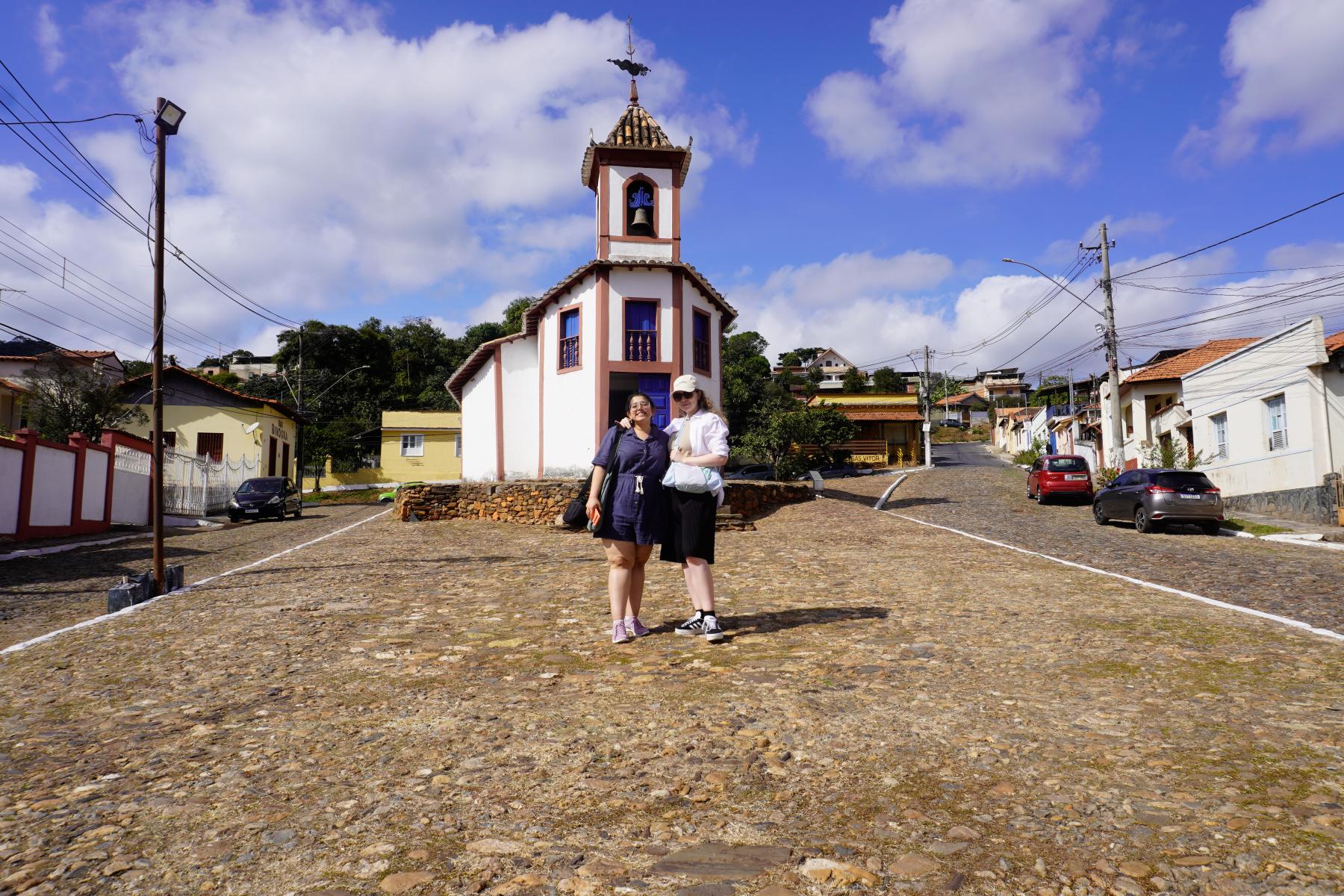
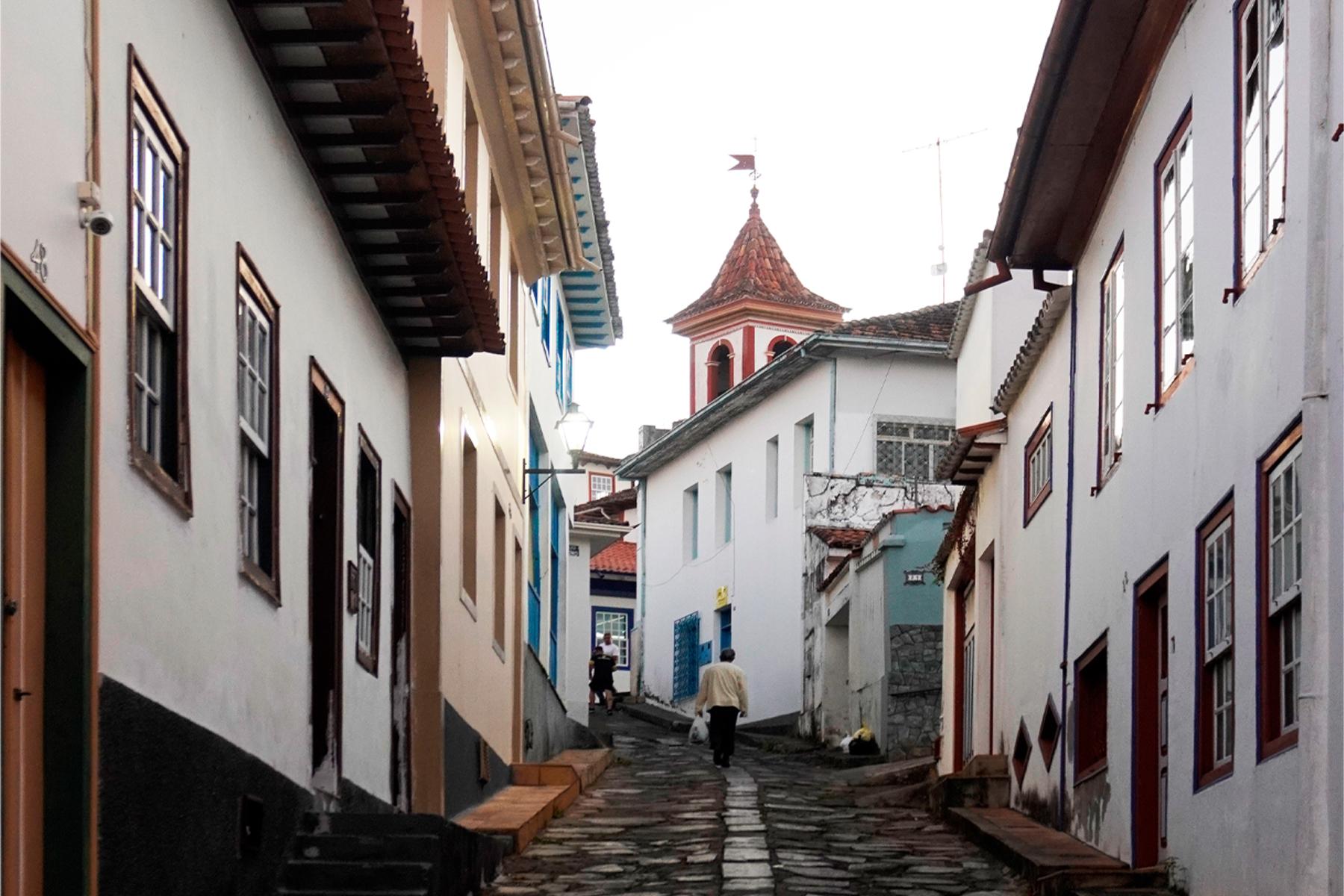
"Baroque, The Soul of Brazil" traces a journey along the Estrada Real, Brazil's colonial Royal Road, to examine Barroco Mineiro. This European architectural style evolved into a uniquely Brazilian expression through cultural resilience and contextual adaptation.
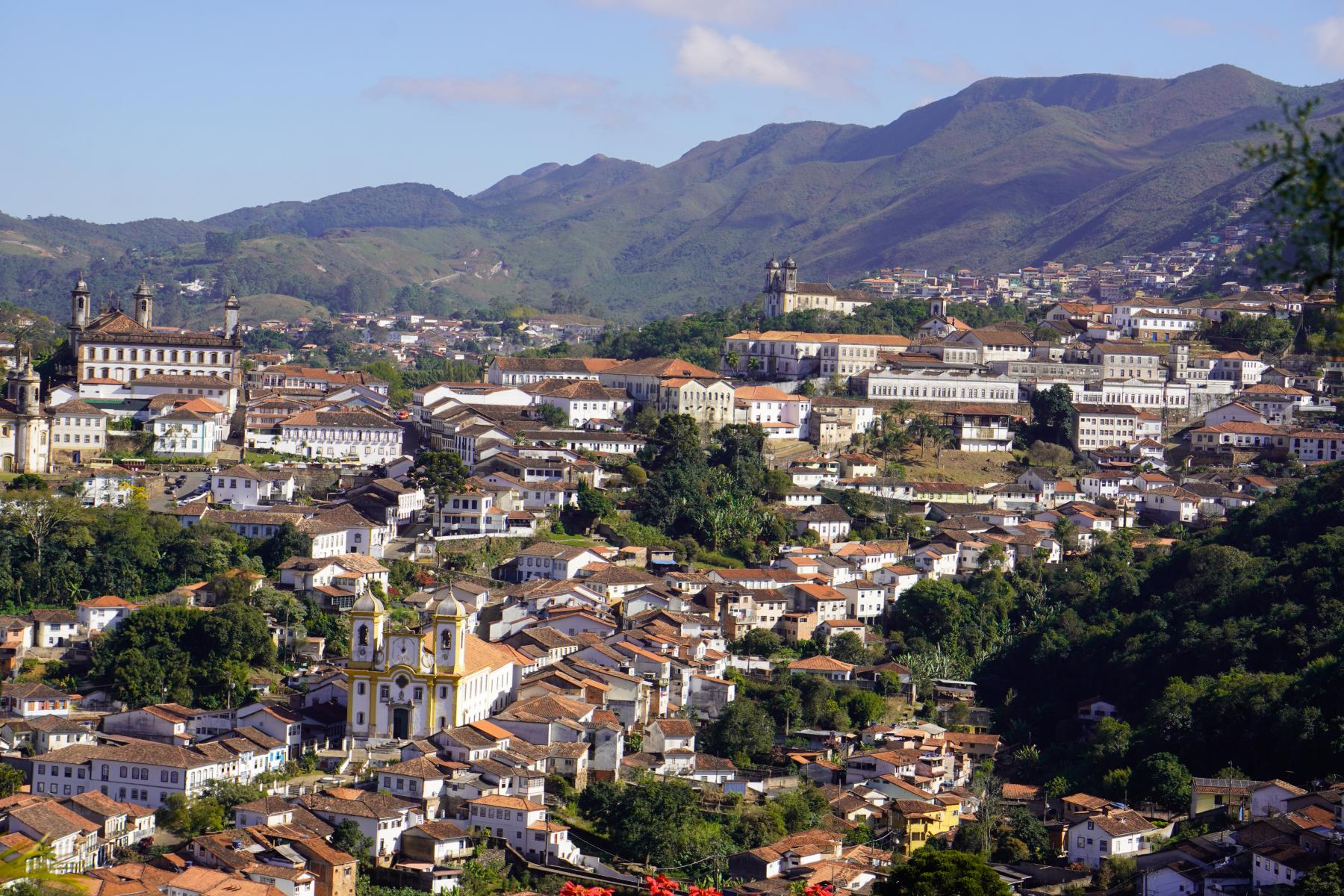
The project began with an interest in the modernist appreciation of Barroco Mineiro, leading to an investigation of formal and ideological connections between modernism and Baroque architecture. In the towns of Ouro Preto and Diamantina, the focus expanded to include the historical and social forces that shaped these baroque environments: the Gold Rush, colonial governance, social hierarchy, preservation efforts, and the ongoing construction of national identity.
The exhibit presents Brazil's landscape, architecture, and cultural essence through large-scale photography, supported by sketches, collage, and text that begin to unpack the complex themes embedded in these spaces.
Bio
Karolina Piorko (B.Arch. '21) is a designer at Robert A.M. Stern Architects in New York, where she works on townhouse renovations that engage with historical narratives and preservation through rigorous research and contextual design. She is also a member of Triple Entendre, an art collective that creates site-specific murals and public workshops that invite communities to imagine resilient futures shaped by environmental change and local histories. She is interested in how space and architecture can reveal suppressed narratives, questioning who decides, through preservation and redevelopment, what heritage is upheld and whose histories are excluded.
Rabei Javaid Bhatti (B.Arch. '22) is a designer and storyteller from Pakistan whose work bridges architecture, film, and narrative. She earned her Bachelor of Architecture with a minor in Film from Cornell University, where her thesis, Archive of Silences, used film interventions to uncover erased histories along Orchard Street in New York's Lower East Side. She is the cocreator of DOC-U-SPACE, a platform for emerging designers to share their stories about systemic challenges while forging interdisciplinary careers. Currently, she works at Robert A.M. Stern Architects, focusing on multifamily towers and master plans. Her work integrates rigorous research with client-focused design to create meaningful spatial stories across diverse international contexts and scales. She is interested in how design can confront colonial legacies and inherited histories, and how storytelling can both reveal and shape the political and emotional weight carried by space.
Acknowledgement
Baroque, The Soul of Brazil was supported by Robert A.M. Stern Architects, whose ongoing engagement with cultural and academic initiatives helped make this project possible.
Both Piorko and Javaid Bhatti are grateful to the professors and guides in Brazil for their invaluable contributions to the development of this project, and Cornell's Department of Architecture for welcoming them back to Sibley Hall.