Exhibition
Location
Experimental Gallery
Tjaden Hall
M–F, 8 a.m.–4:30 p.m.
Contact
Department of Art
(607) 255-6730
Abstract
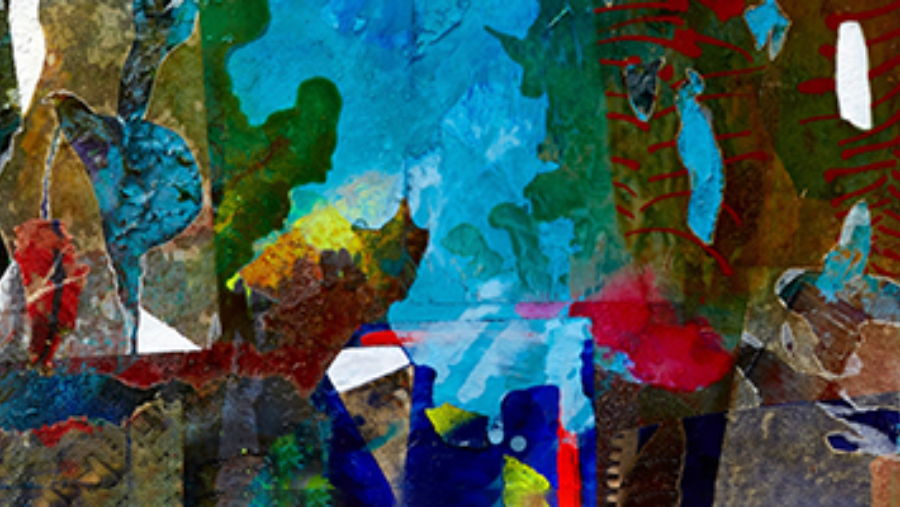
Like us, they are alive in Onajevwe’s new body of work, its title borrowed from Christina Sharpe’s In the Wake: On Blackness and Being, a text that threads through the exhibition with care and resonance. In this exhibition, Onajevwe commands space. Through shifting materialities, she opens room for Black being—for visual narratives that resist containment and insist on expansion. The works do not stand in isolation; they carry a spiritual presence, reaching toward the ancestors who guide her hand and steady her process of making.
This body of work marks a return to confidence in creating both objects and spaces. It is at once a reckoning and an offering, alive with gestures that build, overlap, and entwine, suggesting that form is never fixed but always in motion. Like us, they are alive, which invites viewers to linger, listen, and recognize aliveness not as an endpoint but as an unfolding — a continual becoming that stretches across history, spirit, and the present moment of encounter.
Biography
Onajevwe
Onajevwe (B.F.A. ’26) is an interdisciplinary artist whose practice exists in identity, spiritual reckoning, and the creation of new visual dialogues. At the heart of her work is a continual reaching for truth, a search that shapes both her process and her presence. Process, to her, holds more weight than outcome — it is in repetition, in layering, in the quiet persistence of making that she edges closer to what she seeks. She leaves something of her prior self in a room as a trace to be discovered. Each work becomes both remnant and threshold, marking transformation while opening space for others to step inside. What she leaves behind is not static but alive — an offering, an invitation to continue the search alongside her, to find resonance in the fragments, and to imagine new ways of seeing and connecting through the traces left in her making.