


Groundwork: Cultivation Rooted in Art and Action
At the intersection of art, ecology, and community, students enrolled in a course led by Associate Professor Jen de los Reyes explore research and practice that moves beyond the studio and into Ithaca's local ecologies.

Adjacent to Cayuga Lake on 4.2 acres, Art faculty Jen de los Reyes and Oscar Rene Cornejo have established LAND, a "site of research, cultivation, care, and conservation" that is under development to support outdoor art and ecology studios, a local species-resilient, high-growth regenerative forest, and community-driven agriculture. The project's foundational work has been supported by a 2025 Creative Capital grant and a seed grant from the Cornell Mui Ho Center for Cities in 2024.
In parallel, during the spring 2025 semester and continuing this fall, de los Reyes has led the course LAND: Art, Ecology and Environmental Activism, which encourages students to examine the work of artists who have engaged in land-based practices and to develop their own skills through hands-on projects.
With a full growing season of class experience now complete, de los Reyes reflects on the lessons LAND has taught so far.
Molly Sheridan: What were the pedagogical goals of the class, and how did you instill these lessons?
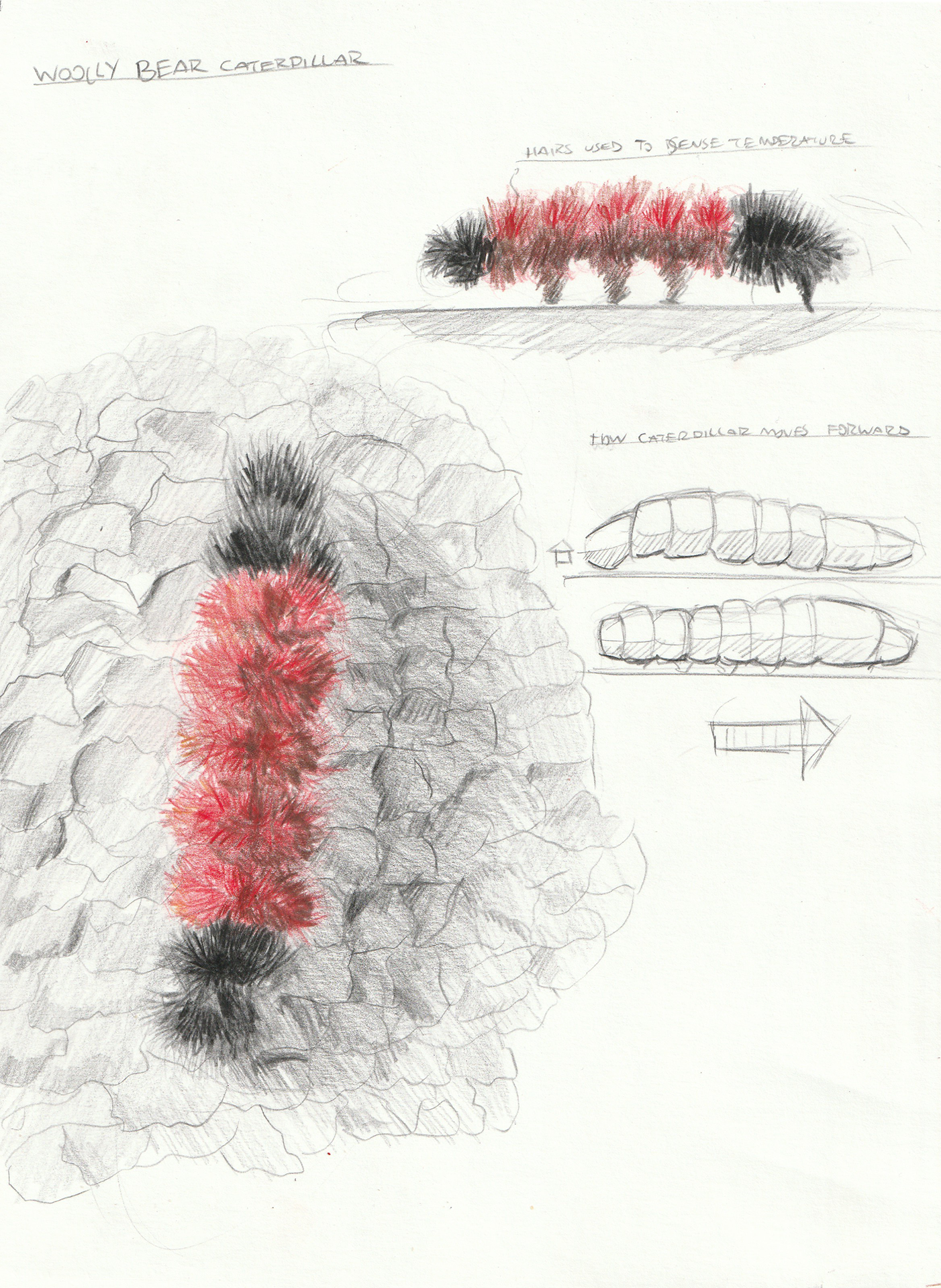
Curiosity report on the Woolly Bear Caterpillar by Jebreel Bessiso (B.Arch. '26).
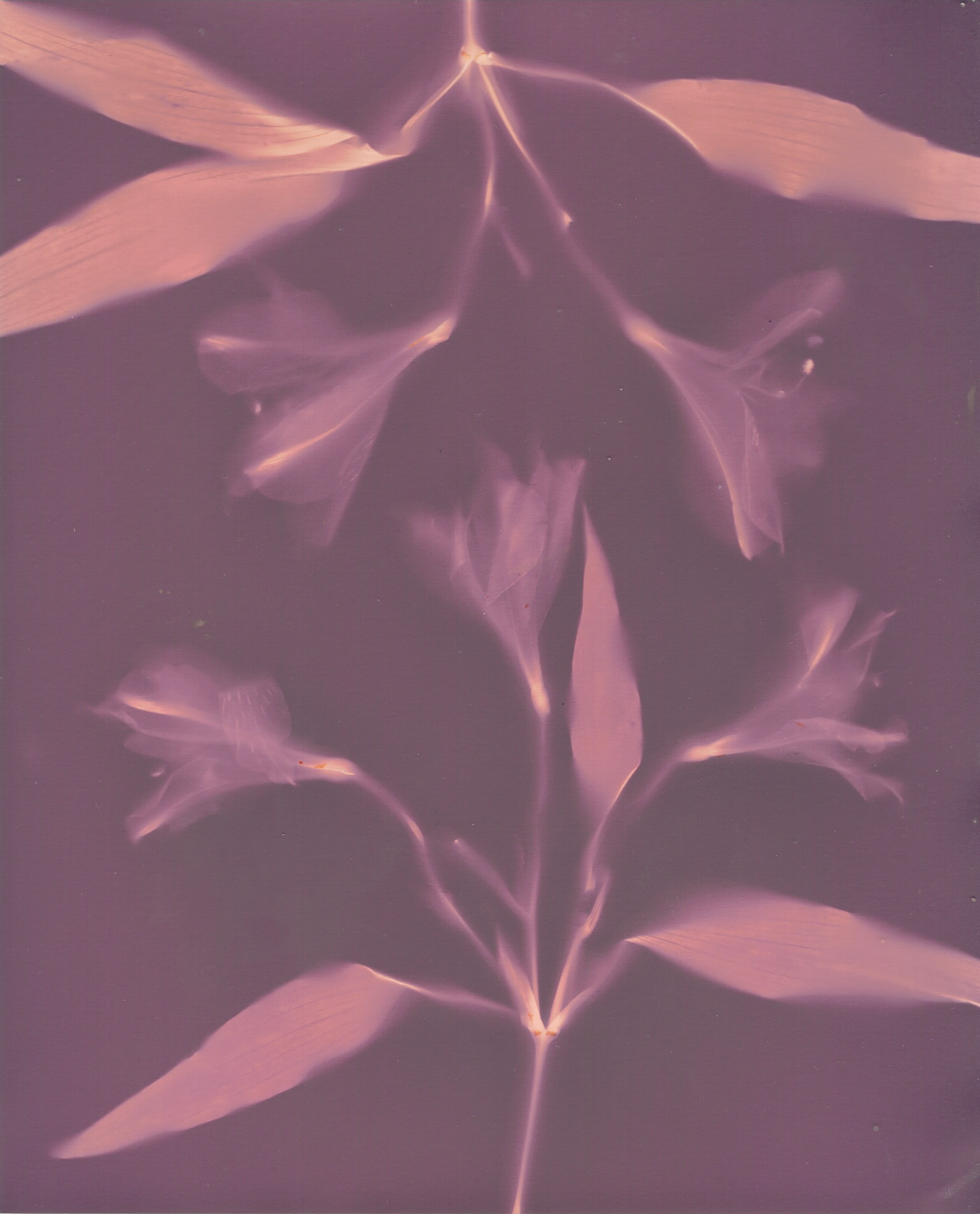
Curiosity report on the Alstroemeria "Sirius" by Anastasia Ottens-Sargent (M.F.A. '27).
Jen de los Reyes: A 2014 study conducted by the US Forest Service and the Ad Council shows that a North American child aged between four and ten years old can recognize more than a thousand brand logos at a glance, but cannot identify the leaves of ten regional plants. This is the generation that is currently in college, or about to start. For me, one of the biggest parts of this class is reconciling this massive disconnect from the natural environment and reconnecting students to local ecologies. We spend a lot of time outdoors and take advantage of over a dozen hikes on Cornell's campus, as well as regional field trips and site visits. I emphasize a sensitivity to the world around us and the other living beings who share it with us.
One of the ways I do this is through creating assignments that are centered in careful observation. An ongoing assignment is a "Curiosity Report" in which students present research and a visual rendering on either a tree species or plant, animal, or insect that they identified for the first time that week. In their reports, they share the indigenous and common names for what they identified, as well as lessons we can learn from these species. It is so incredible to see what students are paying attention to.
In addition to acquiring wide-ranging interdisciplinary knowledge about the local ecologies of the Ithaca area and its habitat through self-directed research and site observation, students expand their imaginative and aesthetic capacities to respond to climate crises through studying artists working creatively to address environmental concerns and incorporate these into their art making, as well as learning how to grow, ethically harvest, forage, and process plants to create artmaking materials.
MS: What was the student reaction to these experiences? Any unexpected teaching or learning moments?
Excerpt of LAND/LAND by Césaire José Carroll-Domínguez (B.F.A. '28). Super 8 Kodak Motion Picture film developed at home in chemistry devised by the artist made utilizing tannins from the boiled down leaves from the land which is the subject of the project.
JdlR: Students have found ways to incorporate their own "land ethic" into their art making. One of the art majors in the class, Césaire José Carroll-Domínguez (B.F.A. '28), created a film titled LAND/LAND, dealing with Cornell's land-holding history. He developed the film using a combination of natural materials, including fallen leaves mostly foraged from campus. The film is completely context-specific — filmed on site, the work is about and developed using materials from the land. The result is a really beautiful, poetic, and atmospheric piece deeply rooted in place.
One of the most challenging teaching lessons in this class is simply working with the weather and cycles and seasons of planting, and being able to adapt and shift plans accordingly. Similarly, much of the work we do in the course extends well beyond the parameters of the semester. I work to build connections between classes so that there is continuity of work that feels meaningful.
MS: What skills and ideas do you hope students take away from the course and on-site exposure?

Faculty, students, and community members collaborate to install local trees and shrubs, creating a regenerative Miyawaki forest on the LAND site. Anson Wigner / AAP

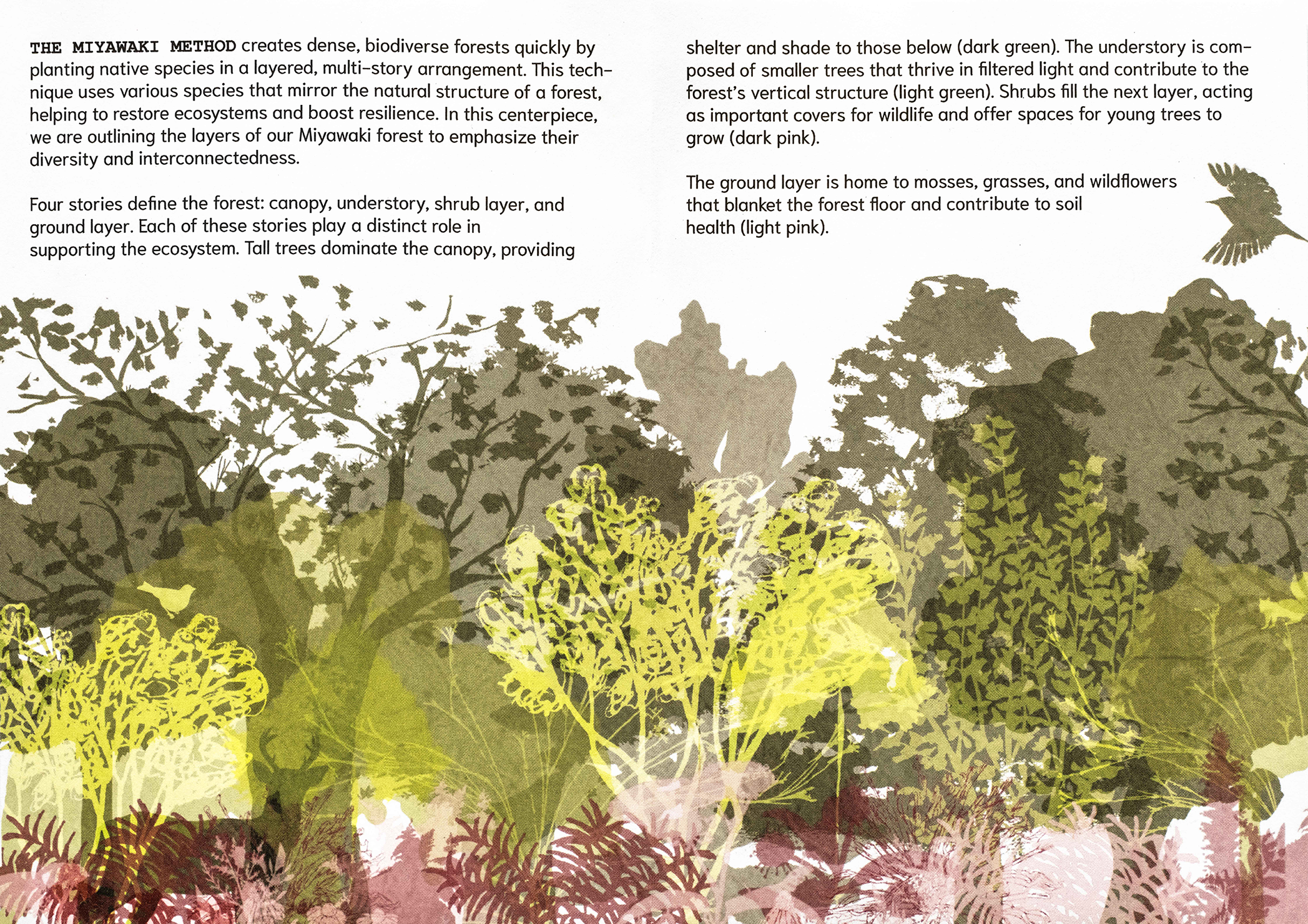
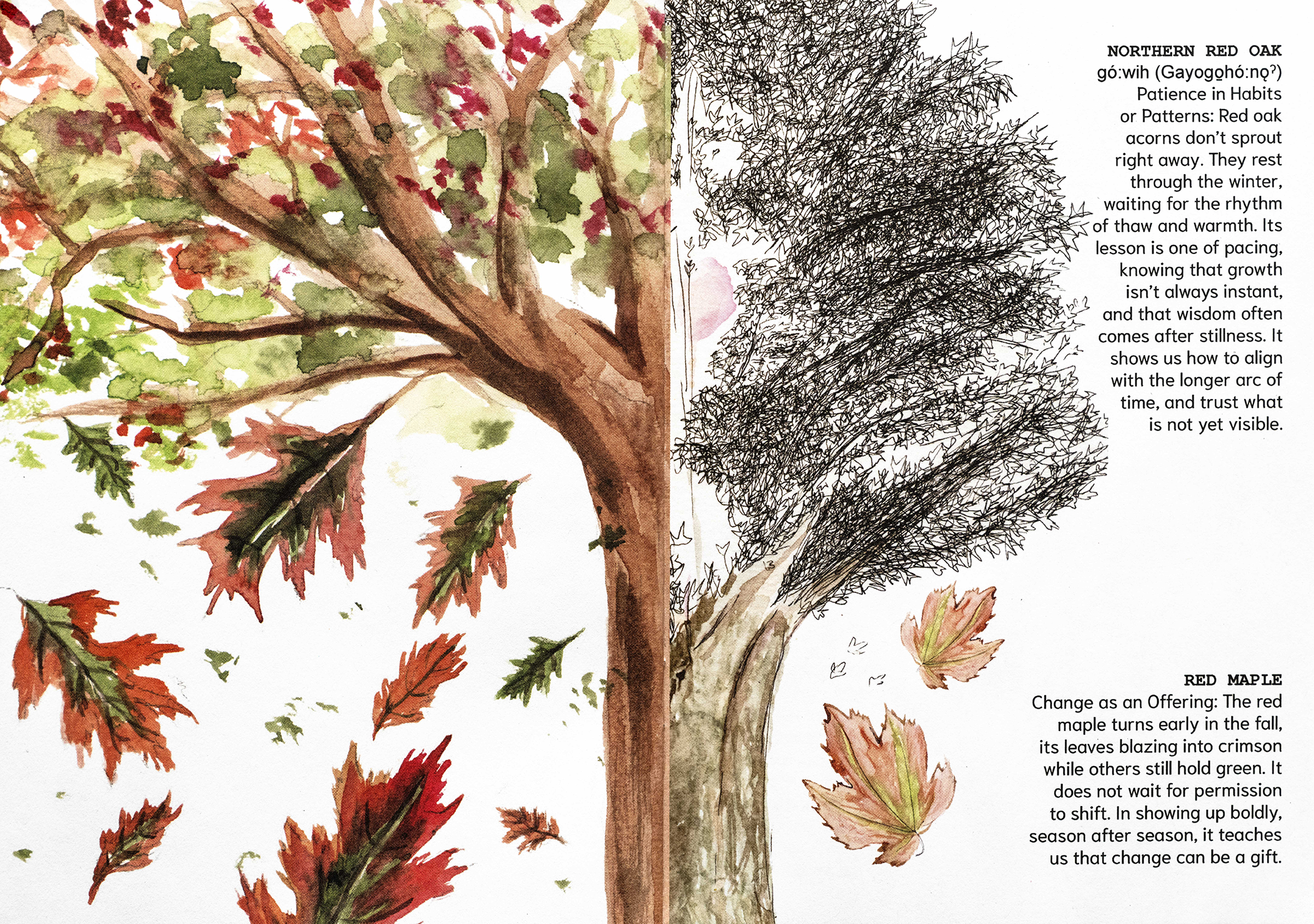
Page from A Field Guide to LAND, created by students in the spring 2025 cohort.
Faculty, students, and community members collaborate to install local trees and shrubs, creating a regenerative Miyawaki forest on the LAND site. Anson Wigner / AAP

Faculty, students, and community members collaborate to install local trees and shrubs, creating a regenerative Miyawaki forest on the LAND site. Anson Wigner / AAP

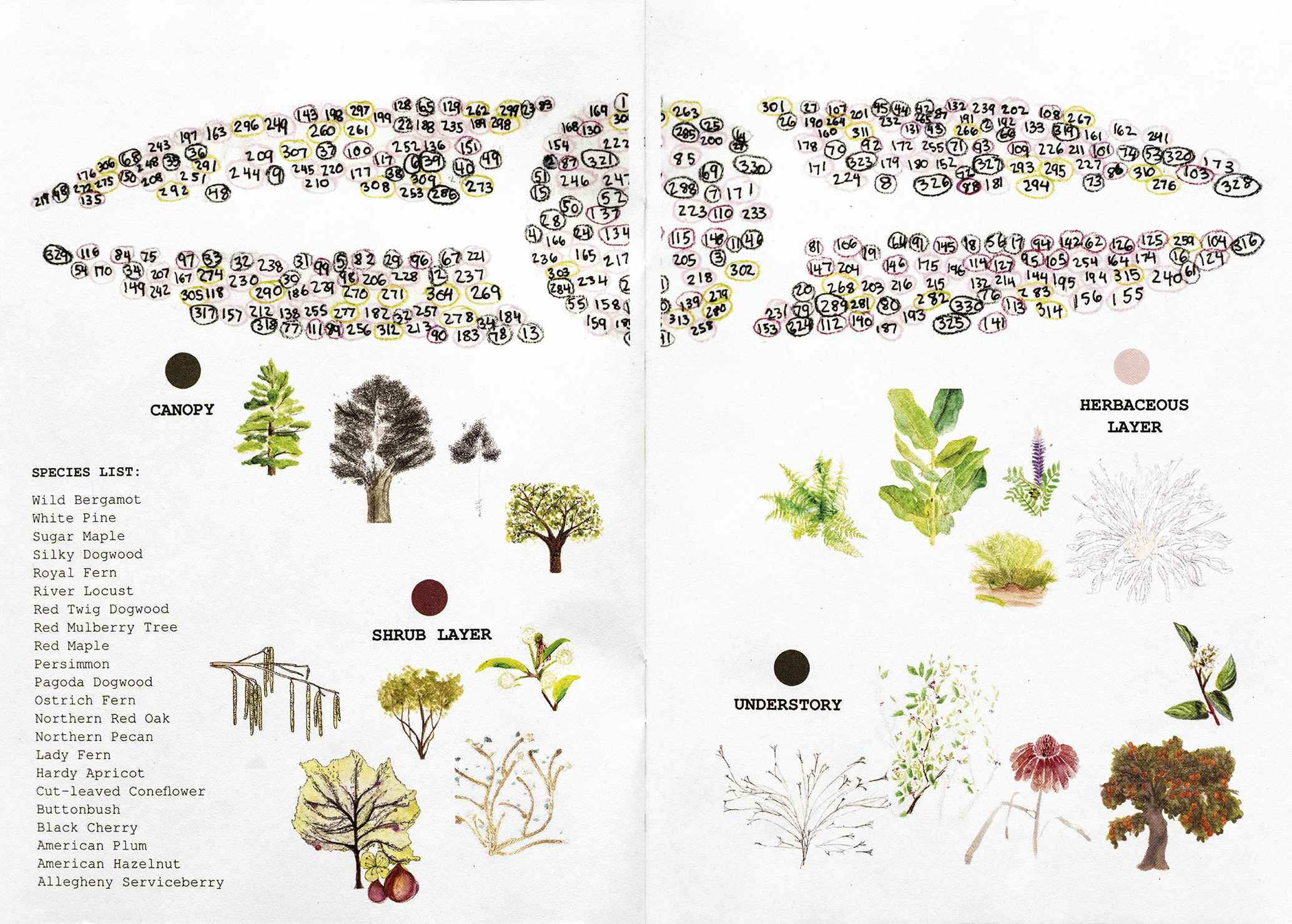
Page from A Field Guide to LAND, created by students in the spring 2025 cohort.
Faculty, students, and community members collaborate to install local trees and shrubs, creating a regenerative Miyawaki forest on the LAND site. Anson Wigner / AAP
Page from A Field Guide to LAND, created by students in the spring 2025 cohort.

Faculty, students, and community members collaborate to install local trees and shrubs, creating a regenerative Miyawaki forest on the LAND site. Anson Wigner / AAP
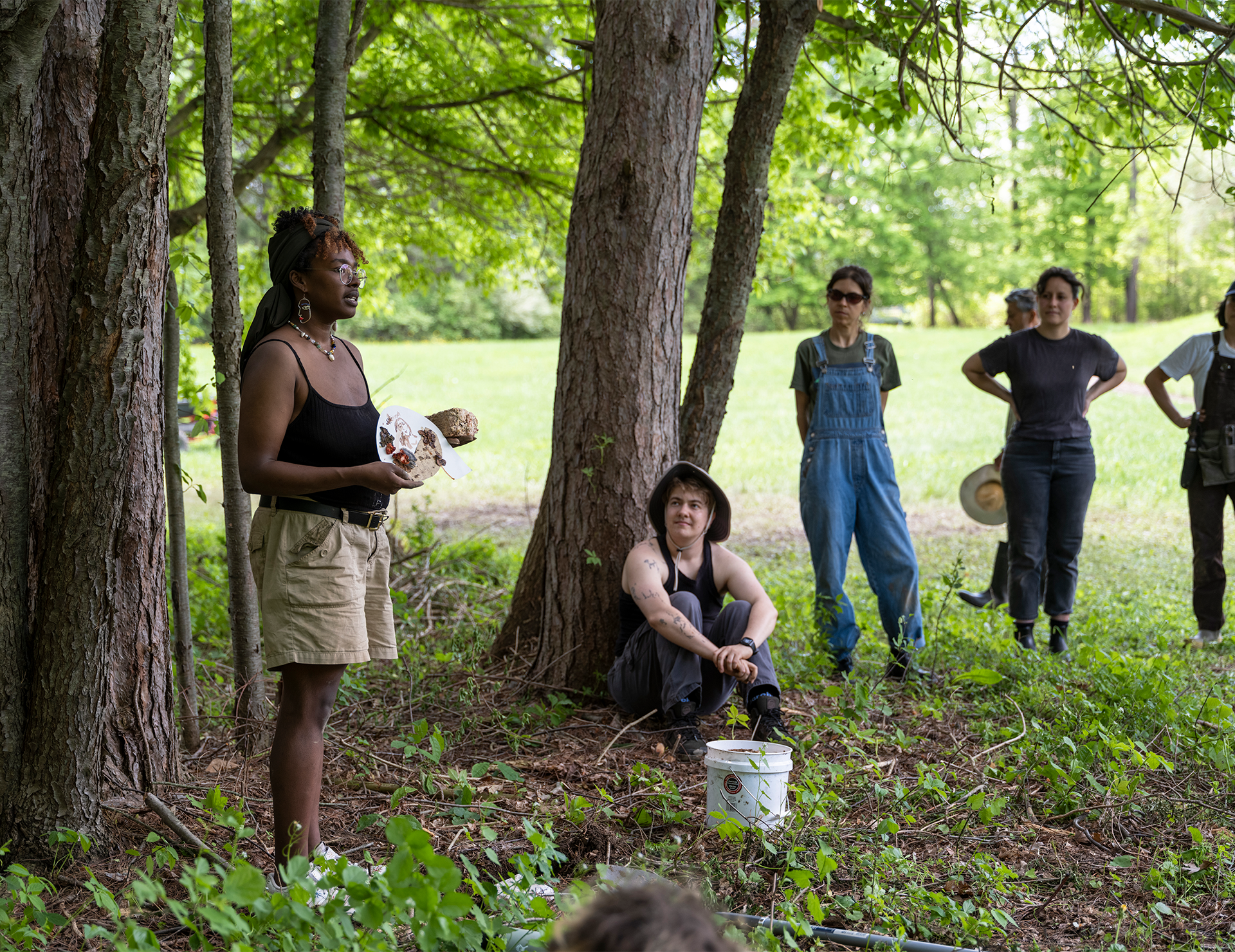
JdlR: Last spring, the class undertook a large-scale, community-engaged project: planting a Miyawaki forest. The regional, resilient, high-growth regenerative forest comprised 330 local trees and shrubs, representing 23 species. At the core of the Miyawaki method exists the principle that planting locally resilient trees in close proximity mimics the natural canopy of a forest, supporting one another and accelerating growth up to ten times faster. The forest design incorporates plantings that can be harvested for artmaking and provide sustainable materials for artists. The class practiced responsible harvesting, cultivating, and creating our own supplies. Crafting these materials takes time, just as the forest itself needs time to grow. When you are involved in the whole process of planting, growing, tending, harvesting, and processing, it really makes you realize how precious and valuable these materials are.
This current iteration of the class helps care for the forest planted by the last group, and the current set of students is assisting with the long-term planning and planting of a food forest that will contribute to the local food landscape for native species, which can provide food for donation to local food pantries. Students literally leave with the skills to plan and plant these kinds of forests in their own communities, and with the understanding of how art can help to build empathy and connection with the natural world that so many of us have become disconnected from. My greatest hope for this class is that these forests are just the first seeds of many more to come.
Also of Interest
-
Sacramento International Airport Commissions Art Chair Paul Ramírez Jonas to Create Permanent Public Installation October 27, 2025
-
Pursuing Purpose, Building Knowledge: AAP Embarks on the Fall 2025 Semester August 22, 2025

-
Advancing the Mission: New Faculty Continue Expanding Expertise Across Disciplines August 21, 2025

-
Ratan N. Tata Posthumously Honored with Inaugural Distinguished Alumni Award April 24, 2025

